
Europe’s Summer of Extremes: Heat, Fire and Climate Risk
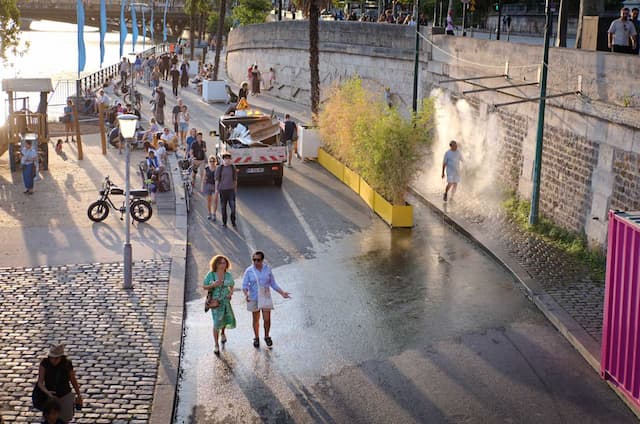
France records its hottest month since 1900 as Europe faces heatwaves, wildfires, drought, health risks and a stark climate warning.
France has experienced a summer of extraordinary weather extremes, with July reportedly becoming the hottest month recorded in the country since national measurements began in 1900.
According to figures cited in the original report, France’s average temperature reached 24.9°C during July. That narrowly exceeded the previous monthly record of 24.8°C, set during the devastating August 2003 heatwave, and surpassed the July record of 24.4°C recorded in 2006.
Although the difference between these figures may appear small, a national monthly average is a powerful climate indicator. It reflects temperatures across the entire country and over a sustained period, rather than a single afternoon in one location. When such records are broken, they signal that exceptional heat has become widespread and persistent.
The July record followed an already remarkable June. France reportedly recorded its hottest June on record, with a national average temperature of 22.7°C—around 3.8°C above the seasonal norm. The country also broke its national daily temperature record twice in succession during the second half of the month.
These figures place France at the centre of an increasingly intense European heatwave season. But the significance extends beyond temperature records. Extreme heat is affecting public health, agriculture, water supplies, transport, energy systems, tourism and the wider natural environment.
A Summer of Repeated Heatwaves
June established an alarming pattern
The summer did not begin with one isolated heatwave. Instead, France and neighbouring countries experienced a succession of unusually early and intense heat events.
Copernicus reported that June 2026 was the hottest June on record for western Europe, with the region’s average temperature reaching 20.74°C—3.06°C above the 1991–2020 average. The month was also the second-warmest June globally in the ERA5 dataset.
The June heatwave affected much of western and central Europe, with several countries registering monthly or all-time temperature records. Dry conditions compounded the danger by reducing soil moisture and increasing the risk of drought and wildfire, particularly in southern France and the Iberian Peninsula.
France’s national average temperature reportedly reached 29.8°C on 23 June, before the record was broken again the following day. Météo-France figures cited by the United Nations put the national average at 30.0°C on 24 June, while temperatures reached 43.8°C in Palluau in western France.
This sequence demonstrates why heatwave specialists focus not only on the highest daytime temperature but also on duration, nighttime conditions and the number of people exposed.
Hot nights increase health risks
Nighttime temperatures are a particularly important part of the story. During a typical hot day, the body can recover if temperatures fall substantially after sunset. When nights remain above 20°C—a condition often known as a tropical night—people may struggle to cool down, sleep properly and recover from daytime heat.
The World Meteorological Organization has warned that nighttime temperatures can be more informative than daytime peaks when assessing health risks. A day reaching 38°C but cooling to 18°C overnight presents a different danger from a day reaching 36°C while remaining above 25°C throughout the night.
Persistent nighttime heat is especially hazardous for older people, infants, outdoor workers, people with chronic illnesses and those living in poorly ventilated homes. It can also place additional pressure on hospitals and emergency services.
Dry Weather Fuels Fire and Drought
July was reportedly France’s third-driest July on record, with rainfall almost 70% below average. That lack of precipitation intensified the impact of the heat.
When soils dry out, vegetation loses moisture and becomes more flammable. Grass, crops, woodland and scrub can ignite more easily, while fires spread faster in hot, windy conditions. Water restrictions may also become necessary as reservoirs, rivers and groundwater supplies decline.
Wildfires were reported in areas including Gironde, near Bordeaux. The region’s pine forests, dry vegetation and periodic strong winds can create dangerous conditions for fire crews and nearby communities.
The wildfire threat is not limited to France. Spain, Portugal, Italy, Greece and parts of central and eastern Europe have also faced growing fire risks during periods of extreme heat and dryness. Copernicus noted that below-average river flows affected large parts of France and other European regions during June, while persistent dryness increased drought concerns.
This combination of high temperatures and limited rainfall creates a cycle of environmental stress:
Dry soils reduce the land’s ability to absorb and retain water.
Vegetation becomes more vulnerable to fire.
Rivers and reservoirs decline.
Agriculture requires more irrigation.
Higher demand for cooling places pressure on electricity systems.
Sudden storms after prolonged dryness can cause flash flooding because parched ground absorbs water less efficiently.
Europe Under Siege From Extreme Heat
France’s records formed part of a wider European emergency. Greece reportedly deployed more than 500 firefighters to battle a major wildfire near Athens, while several deaths were linked to the prolonged blaze. Italy placed many major cities under its highest heat alert, and low water levels in the Danube raised concerns about energy infrastructure and river transport in parts of eastern Europe.
The United Nations reported that authorities across Europe were activating heat-health plans as the heatwave affected millions of people. Spain recorded June temperatures above 40°C in several locations, while the United Kingdom, Germany and Switzerland also issued heat warnings.
Extreme heat affects far more than personal comfort. Roads and railway lines can buckle or deform, overhead power equipment may fail, and aircraft operations can be disrupted. Energy demand rises as households, businesses and public buildings use more air conditioning. At the same time, drought can reduce the availability of water for power generation and industrial activity.
Agriculture is also vulnerable. Crops may suffer from heat stress during flowering or fruit development, while livestock face dehydration and reduced productivity. Vineyards, cereal farms, fruit growers and vegetable producers must increasingly manage unpredictable combinations of heat, drought, storms and water restrictions.
Tourism can be affected as well. Outdoor attractions may close during the hottest part of the day, and wildfires can force evacuations or disrupt transport routes. In cities, heat is often amplified by the urban heat-island effect, in which concrete, asphalt and buildings absorb and retain heat.
What Does Climate Change Have to Do With It?
A single heatwave cannot be attributed entirely to climate change without scientific analysis. Weather patterns are shaped by multiple factors, including atmospheric circulation, ocean temperatures, soil moisture and natural climate cycles.
However, climate change raises the baseline temperature. That means a heatwave begins from a warmer starting point and can reach higher extremes. Research cited during the June European heatwave found that human-caused climate change made the extreme nighttime heat dramatically more likely than it would have been only a few decades earlier.
The World Meteorological Organization has also warned that heatwaves are becoming longer, more intense and more frequent as greenhouse-gas emissions continue. The persistence of high-pressure systems—sometimes described as blocking patterns—can trap hot, dry air over a region for days or weeks.
Copernicus described the succession of heatwaves in May, June and July as an illustration of the growing challenge posed by more frequent and intense heat extremes. The organisation also pointed to unusually warm ocean temperatures as part of the broader climate background to the European heatwave.
The key point is not that every hot summer is caused by climate change. Rather, a warming climate makes exceptional heat more probable and increases the likelihood that old temperature records will be broken.
Protecting People During Extreme Heat
Heat protection requires both immediate action and long-term planning. During severe heat, public health authorities generally advise people to stay hydrated, avoid strenuous activity during the hottest hours and check on vulnerable relatives, friends and neighbours.
Homes should be kept as cool as possible by closing shutters or curtains during the day and ventilating rooms when outdoor temperatures fall. People should never leave children, older adults or animals in parked vehicles, even for a short period.
Employers also have a responsibility to protect outdoor and indoor workers. Construction workers, agricultural labourers, delivery drivers and other employees exposed to heat may need adjusted schedules, shaded rest areas, regular water breaks and protective workplace procedures.
Longer-term adaptation will require changes to cities and infrastructure. Useful measures include planting trees, expanding shaded public spaces, improving building insulation, creating cooling centres and designing streets that absorb less heat. Early-warning systems can also help residents, hospitals and emergency services prepare before dangerous temperatures arrive.
A Warning for the Future
France’s record-breaking July is more than a headline about an unusually hot summer. It is a warning about the growing consequences of a warmer climate.
The combination of repeated heatwaves, dry conditions, wildfires, stressed water systems and rising health risks shows how extreme weather events can reinforce one another. A record temperature is important, but the wider impact is measured in disrupted lives, damaged ecosystems, exhausted emergency services and vulnerable communities placed under sustained pressure.
Europe’s summer of extremes also highlights the need for reliable climate data and clear public communication. Temperature records help scientists track a changing climate, while heat-health warnings give individuals and authorities the opportunity to act before conditions become life-threatening.
As greenhouse-gas emissions continue to influence the global climate, summers like this may become more common. Reducing emissions remains essential, but adaptation is equally urgent. Communities must prepare for hotter days, warmer nights, greater wildfire risk and more frequent pressure on water and energy supplies.
The question is no longer whether Europe will experience extreme heat. The challenge is how quickly governments, businesses and households can adapt to a climate in which yesterday’s exceptional temperatures increasingly become tomorrow’s baseline.
Enjoyed this? Get the week’s top France stories

One email every Sunday. Unsubscribe anytime.

