
Heatwave, Fires… Wild Animals Pay a Very Heavy Price: What to do if You See One in Distress?
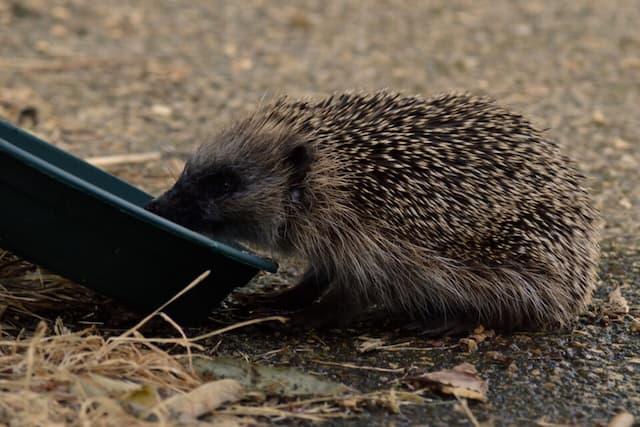
With the monster fires devouring the southwest of France, some animals suffer from burns, dehydration or cannot escape.
Fires continue to destroy hectares of forest in Gironde and in the Var, while more than 116,000 hectares have already gone up in smoke since the start of the year. A record surface for fires which, in addition to destroying the habitat of human beings, destroy that of wildlife. What’s more, the new heatwave what is coming this week also risks further stressing animals exhausted by the unprecedented heat of this summer 2026. So if you come across fox, rabbit or another hedgehog in distress on your way, here are the right actions to know to help him.
Fires that destroy wildlife
According to the Minister of Ecological Transition, Monique Barbut, the consequences of these fires already promise to be “catastrophic”, with “extremely significant losses” among wildlife.
Since the start of the fires in the southwest of France, several videos of animals escaping the flames have made the rounds social networks.
View this post on Instagram
With, sometimes, moving rescues of animals in distress.
Drying out water points forces animals to travel long distances, sometimes to the point of exhaustion. Ecosystems are also disrupted by the destruction of vegetation, the scarcity of food resources and fires. Even aquatic species suffer: the drop in dissolved oxygen in the water can cause them to asphyxiate.
What to do to help a wild animal in distress?
But you shouldn’t do anything if you come across an animal in distress. “Ideally, only capture an animal if it is obviously injured”, insists the LPO.
In all cases, you must contact an animal protection association to find out precisely what to do and determine whether a rescue can be carried out by the firefighters or by a care center: “Don’t act without support, because mishandling can make the situation worse. “
And in a region plagued by fires, the LPO, which acts in favor birds but also more broadly biodiversity, remember that you should never enter an area on fire or recently burned.
How to arrange your exterior to help animals?
The LPO advises providing fresh water in shallow containers, with a stone to prevent drowning. “A simple but vital gesture”, supports the association.
If you are lucky enough to have a large garden, creating a natural pond offers a valuable refuge for many species. It is also essential to secure existing water points (basins, swimming pools) to avoid accidents.”
And instead of mowing your garden frequently, it is better to practice differentiated mowing or late mowing to keep areas cool and rich in biodiversity. Planting hedges and trees, favoring local species, helps create islands of freshness and habitats for wildlife. Leaving dead wood, piles of leaves or grassy areas provides natural refuges from the heat”, the association also recommends.
If these safety conditions are met, the LPO recommends first sheltering the animal. If possible, it should be placed “in a closed box, pierced with ventilation holes, lined with newspaper and adapted to its size” and “close the box tightly to prevent the animal from escaping”.
In a guide to rescuing animals in distress, the LPO also advises never showing off or caressing the survivor, because “this additional stress could worsen their condition”.
To lower its temperature, the association recommends placing it in a room at room temperature. It is possible to “place a few drops of water on the edge of the beak, lips or muzzle or let the animal drink on its own”. Be careful, don’t put water that is too cold.
On the other hand, it is not necessary forcing an animal to drink or feed it. Likewise, wetting it or placing it in a cold room, air-conditioned for example, is not a good idea. These actions can lead to hypothermia.
And whether you rescued a bird or a hedgehog, you must not put him in a cage. This could stress him out and he could get hurt.
Enjoyed this? Get the week’s top France stories

One email every Sunday. Unsubscribe anytime.

