Does France’s emphasis on Nuclear Power Guarantee its Energy Independence?
As the Ukraine crisis continues to push fuel prices up, France’s Nuclear Strategy Sounds Independent—Until You Follow the Uranium
Late last year, President Emmanuel Macron announced a bold shift in France’s energy strategy: the country would begin constructing new nuclear power plants after decades of stagnation.
“To guarantee France’s energy independence and meet our climate goals—especially carbon neutrality by 2050—we will, for the first time in decades, restart the construction of nuclear reactors,” Macron declared. He later confirmed plans to build up to 14 new reactors as part of what he called the “renaissance” of France’s nuclear industry.
France’s Nuclear Backbone
France is already a leader in nuclear energy, generating over 70% of its electricity from 56 reactors across 18 plants. Compared to many EU partners, France is less dependent on imported oil and gas, placing it in a stronger position to handle energy shocks, such as those triggered by the war in Ukraine and sanctions against Russia.
Support for nuclear energy has risen domestically. A 2021 BVA poll found 53% of French respondents saw nuclear power as essential for national energy security. That same year, France’s energy independence rate stood at 53.4%—one of the highest in the EU.
The Uranium Question
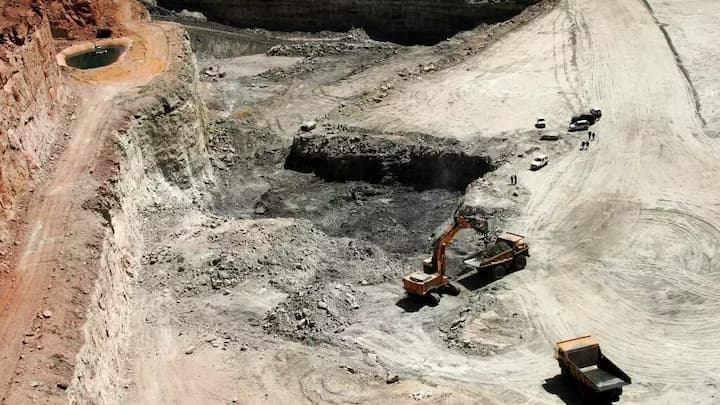
Yet this sense of independence raises questions. Nuclear power relies on uranium, a resource France no longer mines domestically. During its post-1973 oil crisis nuclear expansion, France did extract uranium—peaking at 2,634 tonnes in 1980—but its last uranium mine closed in 2001.
Today, France imports all of the 8,000–10,000 tonnes of uranium it uses annually. Between 2005 and 2020, official Euratom data shows 75% of those imports came from just four countries: Kazakhstan, Australia, Niger, and Uzbekistan.
Independence or Diversified Dependency?
Nuclear firm Orano (formerly Areva) argues that France’s uranium supplies are secure due to their geographical diversity, with 44% sourced from OECD countries. But a group of French researchers and energy specialists challenge this narrative.
In an open letter published by Le Monde, they argue that France’s dependence on foreign uranium is no different from its reliance on imported oil or gas. “France’s energy independence is a red herring,” said Eric Hahonou, a socio-anthropologist and one of the signatories. “We should be talking about interdependence and diversification, not independence.”
The letter also questions the assumption that France controls uranium prices, even in countries where Orano operates. Uranium-exporting countries such as Niger and Kazakhstan are increasingly asserting control over their resources, renegotiating contracts annually and challenging the fixed-price models previously imposed by foreign companies.
The authors warn that, much like OPEC, uranium producers could unite to raise prices—especially as global demand rises in response to nuclear expansions like France’s.
Shifting Global Landscape
France’s historical dominance in uranium mining in Niger has also eroded. Chinese and Canadian companies are now active in Niger, breaking France’s former monopoly and strengthening Niger’s negotiating power.
The Numbers Game
The 53% energy independence figure may also be misleading. According to physicist Bernard Laponche, the number stems from a convention that counts the heat generated in French nuclear reactors as primary energy—even though the uranium itself is imported. If the fuel were considered as the primary input, the independence rate would drop to around 12%, as confirmed by the energy ministry’s 2019 report.
Health and Environmental Costs
The critics also point to the environmental and human toll of uranium mining, especially in countries like Niger. “In places like Arlit, radioactive dust can spread through the wind,” said Hahonou. “It affects water, livestock, and human health, including birth defects.”
Their conclusion: Macron’s nuclear revival may reduce France’s reliance on fossil fuels, but it simply shifts dependency to another resource—uranium—and imposes new risks on vulnerable populations.
Toward Real Independence?
The researchers pose a final question: If energy sovereignty is truly the goal, wouldn’t a transition to renewables and a national strategy of energy sobriety offer a more sustainable path?
While Orano claims current uranium reserves are sufficient to fuel reactors for another 250 years, critics argue that France’s future energy security should be based not just on supply stability—but also on ethics, environmental justice, and long-term resilience.
Enjoyed this? Get the week’s top France stories

One email every Sunday. Unsubscribe anytime.