
Europe Heatwave Crisis: 40°C Threat Looms
Europe Braces for Extreme Heatwave as Temperatures Approach 40°C
Western Europe is entering a period of dangerously high temperatures, with forecasts indicating that parts of France, Spain, and Portugal could hit 40°C by the weekend. This early-summer heatwave, driven by a powerful “heat dome” pushing hot air north from the Sahara, is already triggering health alerts, infrastructure concerns, and unusual emergency measures across the continent.
For residents in France—especially those in and around Paris—this is more than just a hot spell. It is a clear signal of how rapidly climate patterns are shifting, and how governments, cities, and industries are being forced to adapt in real time.
What Is Causing This Heatwave?
At the centre of the current crisis is a meteorological phenomenon known as a heat dome. This occurs when a high-pressure system traps hot air beneath it, preventing cooler air from circulating and allowing temperatures to build over several days.
Key contributing factors include:
Hot air mass moving north from the Sahara
Persistent high-pressure system over Western Europe
Dry ground conditions amplifying heat intensity
Early-season timing, catching infrastructure and populations less prepared
Unlike short bursts of heat, heat domes can sustain extreme temperatures for days, even weeks, increasing both health risks and economic disruption.
France at the Epicentre
France is expected to be among the hardest-hit countries, with temperatures forecast to reach up to 40°C in parts of the country by Sunday, coinciding with the Fête de la Musique.
In recent days, southern and western regions have already recorded temperatures in the mid-30s, significantly above seasonal norms. Forecast models suggest temperatures are running 9–13°C higher than the 1991–2020 averages across several European countries.
Why this matters:
Early-season heatwaves tend to have higher health impacts
Infrastructure is less prepared compared to mid-summer
Schools, transport, and workplaces are still operating at full capacity
This follows a record-breaking May, where parts of Western Europe experienced temperatures more than 10°C above average—an anomaly that scientists increasingly link to climate change.
Paris Takes Unusual Action: Canal Swimming Opens Early
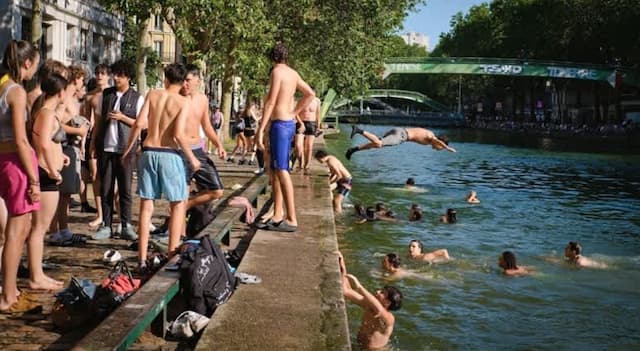
In a rare move, Paris authorities have opened sections of the Canal Saint-Martin for public swimming weeks ahead of schedule. The decision reflects both the severity of the heat and a shift in urban policy toward adaptation.
Mayor Emmanuel Grégoire acknowledged the reality on the ground: preventing people from cooling off during extreme heat is no longer practical or safe.
Details of the initiative:
100-metre supervised swimming zone
Lifeguards present from 4 p.m. to 8 p.m.
Open specifically during heatwave conditions
This initiative also ties into longer-term plans to make Paris more climate-resilient, especially ahead of future summers expected to bring more frequent extreme heat events.
UK Issues Heat Health Alerts
While the UK will not reach the same extremes as southern Europe, authorities are taking the situation seriously. The UK Health Security Agency has issued yellow heat health alerts across large parts of England, including London and the South East.
Temperatures are expected to climb into the low 30s°C—significant for a country where infrastructure and housing are not designed for sustained heat.
Risks highlighted by authorities:
Increased pressure on the NHS
Higher risk for elderly and vulnerable populations
Disruption to transport systems
Reduced productivity in workplaces
The British Red Cross has also warned that even moderate heat in the UK can have severe consequences due to lack of adaptation.
Nuclear Power Under Pressure
One of the most overlooked impacts of extreme heat is its effect on energy production—particularly nuclear power.
France, which relies heavily on nuclear energy, is already seeing potential disruptions. EDF has warned that rising river temperatures could force reductions in output at several plants, including Saint-Alban and Bugey.
Why heat affects nuclear plants:
Reactors use river water for cooling
Environmental regulations limit water discharge temperatures
Rivers are already warmer during heatwaves
For example:
Maximum downstream temperature limit: 28°C
Maximum allowable temperature increase: 3°C
When these thresholds are approached, plants must reduce output or temporarily shut down to avoid harming aquatic ecosystems.
Long-term implications:
Currently about 0.3% of annual output is affected
Could rise to 1.5% by 2050 due to climate change
Adds pressure to already strained energy systems during peak demand
This creates a paradox: the hotter it gets, the more electricity is needed for cooling—but the harder it becomes to produce it.
Health Risks and Public Safety Concerns
Extreme heat is one of the deadliest natural hazards in Europe, often underestimated because its effects are less visible than storms or floods.
Key health risks include:
Heat exhaustion and heatstroke
Dehydration
Cardiovascular strain
Worsening of existing medical conditions
Urban areas like Paris are particularly vulnerable due to the “urban heat island” effect, where concrete and asphalt trap heat, keeping temperatures higher overnight.
Practical safety tips:
Stay hydrated throughout the day
Avoid outdoor activity during peak afternoon hours
Use fans, shade, and cooling centres where available
Check on elderly neighbours and vulnerable individuals
Climate Change and the Bigger Picture
This heatwave is not an isolated event. It is part of a broader pattern of increasingly frequent and intense heat events across Europe.
Scientists point to several long-term trends:
Earlier onset of summer heatwaves
Longer duration of extreme temperature periods
Higher peak temperatures
Increased strain on infrastructure and ecosystems
Events that were once considered rare are becoming more common, forcing governments and cities to rethink everything from urban design to energy systems.
What This Means for Expats and Residents in France
For English-speaking residents in France—especially readers of your site—this heatwave is both a practical challenge and a sign of changing living conditions.
Key takeaways:
Expect more frequent early-summer heatwaves
Local authorities may introduce more adaptive measures (like public swimming zones)
Energy supply fluctuations could become more common
Property considerations (cooling, insulation) are becoming more important
If you are living in France long-term, adapting to heat is no longer optional—it is becoming part of everyday life.
Final Thoughts: A New European Reality
This week’s heatwave is a clear reminder that Europe is entering a new climate reality. From Paris opening canals for swimmers to nuclear plants reducing output, the ripple effects of extreme heat are touching every aspect of life.
For content creators and site owners like yourself, this also represents a strong opportunity. High-quality, timely, and locally relevant content on topics like heatwaves, climate adaptation, and expat living in France can attract significant traffic—especially when paired with strong SEO and practical value.
Enjoyed this? Get the week’s top France stories

One email every Sunday. Unsubscribe anytime.

