
Europe’s Farm Crisis: Drought Threatens Food Supply
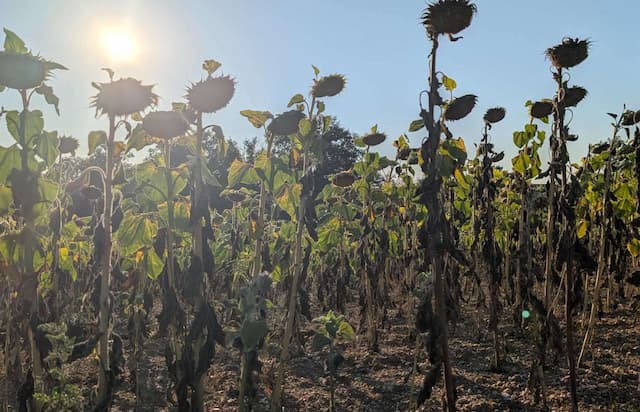
Europe’s Perfect Storm: How Record Drought and Heat Are Triggering a Food Security Crisis
The Unfolding Agricultural Catastrophe
Europe is facing one of its most severe agricultural crises in modern history. As relentless heatwaves scorch the continent and rainfall remains stubbornly absent, farmers from France to Italy to the United Kingdom are sounding the alarm: food shortages are no longer a distant threat—they’re here.
The summer of 2026 has delivered a brutal combination of record-breaking temperatures and historic drought conditions. What began as concerning weather patterns in spring has evolved into a full-blown emergency, with entire regions experiencing their worst harvests since records began. The stakes couldn’t be higher: Europe’s food security, farmer livelihoods, and consumer prices all hang in the balance.
This isn’t just a bad season. It’s a wake-up call about the vulnerability of our food systems in an era of accelerating climate change.
Devastating Crop Losses Across the Continent
France’s Historic Harvest Collapse
France, Europe’s largest grain producer, is experiencing what agricultural officials describe as a “deep crisis.” The numbers are staggering:
Maize production is projected to fall 35 percent to just 9 million tonnes—the lowest output since 1980
Vegetable yields have plummeted across the board: zucchini down 25 percent, lettuce 35 percent, peas 40 percent, broccoli 60 percent, and artichokes expected to be halved
Hay production for winter cattle forage is running 30 percent below the 1989-2018 average
Prince de Bretagne, representing around 1,300 vegetable growers in Brittany, called it a “historic crisis” in the vegetable sector. Eric Legras from France’s canned and frozen vegetable producers’ association told Le Monde: “Usually, one region fares better, which helps compensate. This year, all our main production areas have been hit; and at the same time.”
The French agriculture ministry has announced emergency measures to compensate for economic difficulties and facilitate farmer access to water, acknowledging the risk of farm bankruptcies.
Italy’s Multi-Billion Euro Disaster
Italy’s agricultural sector is reeling from damages exceeding 3 billion euros, according to Coldiretti, the country’s largest farmers’ association. Approximately 60 percent of Italian farmland is affected by drought conditions, with extreme heat, hail, and wildfires compounding the damage.
The situation is particularly acute in southern regions, where irrigation infrastructure has been pushed beyond capacity. Olive oil production—already under pressure from previous dry seasons—faces another 20 percent decline, driving prices to record highs.
Britain’s Worst Cereal Harvest on Record
The United Kingdom is experiencing its worst cereal harvest since records began in 1984. Barley, oats, and rapeseed production is estimated at just 19.5 million tonnes, a dramatic drop that has wholesalers scrambling to import staple items like iceberg lettuce and broccoli from Spain and other European suppliers.
Stephen Eales, a Sussex farmer, reported his wheat yield down 23 percent and oats down 61 percent after receiving just 11 percent of normal rainfall since March. The UK has also seen an estimated £390 million loss in crop value and an 18.5 million litre drop in milk production during July alone, as farmers struggle to feed and cool heat-stressed cattle.
Spain and Beyond
Spain’s cereal harvests show regional devastation: 35 percent below the previous year in Castilla y León, 49 percent in the Madrid region, and 24 percent in Andalucía. The national wine federation predicts a 20 percent fall in wine production for 2026, with smaller grapes resulting from moisture deficiency.
The crisis extends far beyond Western Europe. Poland reports estimated economic losses exceeding €1.4 billion, while Romania has lost over a million hectares of crops. Even traditionally resilient regions in Eastern Europe are feeling the strain.
Water Reserves at Breaking Point
France’s Water Crisis
The drought has pushed water infrastructure to its limits. Nearly 70 percent of France is subject to water-use restrictions, with 67 of 101 departments under the highest crisis alert level as of early August. At this level, water is reserved strictly for priority uses—activities like filling pools, irrigating sports fields, or washing cars are prohibited.
The situation is dire enough that 40,000 people across 80 municipalities are facing supply cuts, forcing them to rely on water tankers or bottled water. Almost all groundwater reserves (94 percent) are below normal levels, and the Geological and Mining Research Office warns that “the condition of aquifers is deteriorating.”
Precipitation across France was 67 percent below average this summer, with July marking the third-driest month since 1959. The country is simultaneously facing its fifth heatwave of the season, creating a compounding effect that shows no signs of relief.
UK Government Response
Recognizing the severity of the situation, UK Prime Minister Andy Burnham announced a £65 million support package for farmers during a visit to southwest England. The funding includes:
£50 million for the Sustainable Farming Incentive
£15 million dedicated to on-farm reservoir construction
Burnham acknowledged that conditions were the most severe for a generation, signaling that emergency measures may need to expand if the drought persists into autumn.
H2: The Economic Toll: €180 Billion and Rising
The financial impact of this crisis extends far beyond individual farms. Triodos Bank, a Dutch institution focused on sustainability, estimates that heat-related disruption could reduce European Union GDP by 1 percent in 2026—equivalent to approximately €180 billion ($208.2 billion).
Agricultural output across the EU could fall by up to 7 percent, with grain production alone expected to drop 24 percent compared to previous years. The June heatwave is estimated to have cost the continent’s grain farmers €2 billion in lost revenue and destroyed 9 million tonnes of crops.
France expects grain production losses worth €891 million, with 3.4 million tonnes of maize lost. Hungary faces 2.4 million tonnes in losses, while Spain has lost 1.4 million tonnes. These aren’t abstract statistics—they represent real income vanishing from rural communities that depend on agriculture.
Why This Year Is Different
A Continent-Wide Crisis
What makes 2026 particularly devastating is the geographic scope. In typical bad years, regions that fare better can compensate for those that struggle. This summer, nearly every major agricultural zone across Europe has been hit simultaneously.
“The atmosphere is thirstier,” explained one climate analyst. Extreme heat supercharged by the climate crisis is increasing evaporation rates, sucking moisture from soils faster than ever recorded. This creates a feedback loop: drier soils lead to higher temperatures, which lead to even drier conditions.
Climate Change as the Accelerant
Scientists point to human-caused global warming as the primary driver intensifying these conditions. The El Niño weather phenomenon has compounded the effect, but the underlying trend is clear: Europe is experiencing more frequent, more intense heatwaves with longer dry spells between rainfall events.
Deadly wildfires have raged through Spain and France, destroying not just forests but also agricultural land. Farmers report facing some of the driest soils on record, with non-irrigated fields particularly vulnerable. In France, non-irrigated maize yields fell 23 percent, while even irrigated maize declined 10.9 percent.
Food Prices Set to Soar
The convergence of supply shortages and continent-wide demand means European nations will likely need to compete with other countries for food imports. This competition will inevitably push prices higher at every level of the supply chain.
The vegetable growers association Légumes de France warned that thousands of tonnes of products worth tens of millions of euros had been lost—including salad leaves, carrots, leeks, garlic, and onions. Production on certain crops is expected to be halved because of the lack of rain.
Olive oil prices, already elevated from previous dry seasons, are expected to rise again as European crops continue to suffer. Dairy products face pressure too, with emergency animal slaughters reported in Switzerland and reduced milk production across the continent.
For consumers, this means:
Higher prices for fresh vegetables, particularly leafy greens and brassicas
Increased costs for grain-based products including bread and pasta
Rising dairy prices as feed costs climb and milk production falls
Record olive oil prices affecting Mediterranean cuisine staples
What This Means for Food Security
The warnings from farmers aren’t hyperbole—they’re based on hard data and generations of agricultural knowledge. When multiple staple crops fail simultaneously across a continent, the implications extend beyond this year’s harvest.
Immediate Concerns
Winter feed shortages are already emerging as a critical issue. Hay prices have doubled in recent weeks across Central Europe, with some regions reporting complete unavailability. Martin Haab, a Swiss dairy farmer and parliament member, warned: “All these feeds that we lost now with this drought will be a pretty big problem next spring.”
Long-Term Implications
This crisis raises fundamental questions about European agricultural resilience. Traditional farming regions are proving vulnerable to climate extremes that were once considered rare. Infrastructure designed for a cooler, wetter climate is struggling to adapt.
The Iran war has also had a significant impact on grain supplies, compounding weather-related losses. As one UK farmer noted: “If this weather continues there’s going to be a food shortage in the future.”
The Path Forward
Governments across Europe are scrambling to respond. Emergency funding, water access programs, and bankruptcy prevention measures are being deployed, but many farmers question whether these interventions are sufficient given the scale of the crisis.
Long-term solutions will require:
Investment in irrigation infrastructure to reduce dependence on rainfall
Crop diversification to spread risk across different varieties
Water conservation technologies including on-farm reservoirs and efficient irrigation systems
Climate-adapted farming practices that account for hotter, drier conditions
Policy reforms that support farmers through transition periods
The summer of 2026 will be remembered as a turning point—the moment when climate change moved from abstract projections to kitchen-table reality for millions of Europeans. Whether it becomes a catalyst for meaningful adaptation or merely another devastating season depends on the choices made now.
For consumers, the message is clear: the era of cheap, abundant food produced under stable climate conditions is ending. The question isn’t whether prices will rise, but how quickly societies can adapt to a new agricultural reality.
Enjoyed this? Get the week’s top France stories

One email every Sunday. Unsubscribe anytime.

