
Rare Earths: Europe and the United States Facing Chinese Blackmail
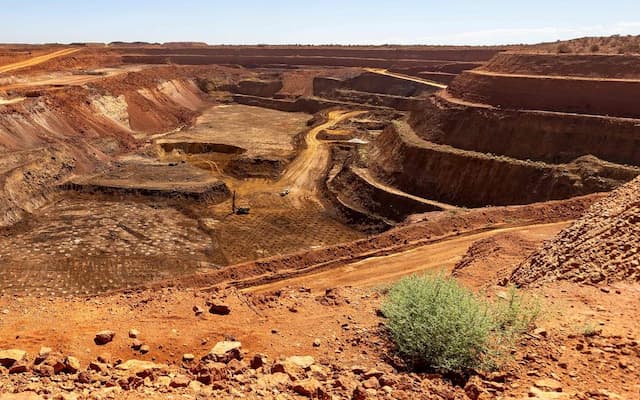
The world’s largest producer announced new controls on the export of technologies linked to these rare earths this month, much to the dismay of the United States and Europe. These materials are essential for digital, automotive, energy or weapons.
La China is the world’s largest producer of rare earths – “the Middle East has oil. China has rare earths”, Deng Xiaoping, then Chinese leader, said in 1992 – but this month he announced new controls on the export of technologies linked to these rare earths, much to the dismay of the United States and Europe.
“The Middle East has oil. China has rare earths. “
Trade tensions between the two countries have increased with the return of Donald Trump to the White House and his desire to impose customs duties on all products entering the United States at the beginning of April. Beijing then decided to respond, leading to new reprisals from Washington to which China responded in turn, leading to customs duties applied reciprocally well beyond 100%.
Economic harm along supply chains
The two countries began a series of meetings at the beginning of May, in Geneva, Stockholm and London, to reduce tensions and reduce customs duties to a minimum of 10% on American products, 30% on Chinese products, but relations remain tense. American Treasury Secretary Scott Bessent accused China at the beginning of the week of wanting to drag the global economy into its fall, while, according to him, the Chinese economy is showing marked signs of slowdown.
The European Commission, for its part, will receive representatives of the Chinese authorities in Brussels “in the coming days” to find “urgent solutions” to the restrictions imposed by China. European Trade Commissioner Maros Sefcovic announced the organization of this meeting during a press conference at the European Parliament, after speaking by video for two hours with his Chinese counterpart, Wang Wentao, about the impact of this measure for European businesses.
The European Union has already publicly protested the new restrictions announced by Beijing, saying they force companies in its member countries to stop production and cause economic harm along supply chains.
Initiatives for the European industrial sectors concerned
It intends to act both diplomatically and at the operational industrial level to help sectors facing these restrictions. On Monday, the Vice-President of the Commission, Stéphane Séjourné, announced to the leaders of the industrial sectors concerned that the EU was preparing various initiatives, particularly in terms of common purchasing and storage centers, or in the recycling of rare earths.
In addition, Maros Sefcovic indicated last week that he was working on a “coordinated response” to China with its G7 partners.
A commercial asset for Beijing
• What is rare earths?
Dysprosium, neodymium and cerium… Rare earths are a group of 17 heavy metals that are actually abundant in the Earth’s crust. Its global reserves amount to 110 million tonnes, including 44 million in China, according to a study by the United States Geological Survey. But their extraction generates toxic pollution which makes many countries reluctant to take responsibility for its exploitation.
The Chinese party state has invested heavily in this sector, aided by more flexible environmental regulations than in other countries.
China has also filed a large number of patents on the production process, reinforcing their domination. 92% of global production is now refined in China, according to the International Energy Agency.
• Strategic importance
Rare earths are used in a large number of everyday, high-tech devices, from light bulbs to guided missiles. Each has unique properties and is difficult to replace.
Neodymium is, for example, used to manufacture ultra-powerful permanent magnets present in guided missile engines, ensuring their precision and efficiency. The F-35 aircraft from the American manufacturer Lockheed Martin requires more than 400 kg of lands rare, according to a recent analysis by the American think tank Center for Strategic and International Studies (CSIS).
• An addiction that is difficult to counter
Chinese exports of rare earths have slowed since early April, when Beijing began requiring domestic producers to obtain permits to export seven types of rare earths. The decision was widely seen as a retaliatory measure to tariffs imposed on Chinese goods by Washington.
This is not the first time that Beijing has used this card. Beijing briefly suspended deliveries to Japan after tensions in disputed waters. Tokyo has since sought to diversify its sources, for example by signing agreements with the Australian group Lynas for production in Malaysia and by developing its recycling capacities. But some experts say Tokyo has made only marginal progress, highlighting the difficulty of actually reducing dependence on China.
The US Department of Defense aims to develop national supply chains in order to guarantee secure access to rare earths necessary for certain weapons by 2027.
Enjoyed this? Get the week’s top France stories

One email every Sunday. Unsubscribe anytime.

