
Farmers Protest EU-Mercosur Trade Deal as Opposition Grows Across Europe
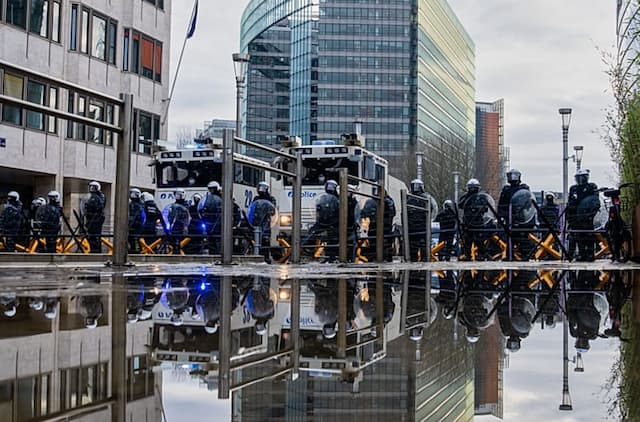
Farmers Take to Brussels Streets Over EU-Mercosur Trade Deal
Brussels turned into a sea of tractors this week as thousands of farmers from across Europe gathered to protest the controversial EU-Mercosur free-trade deal. The demonstration, one of the biggest farmer mobilizations in recent months, coincided with a key European Union leaders’ summit where agricultural and trade issues topped the agenda.
Around 10,000 farmers and hundreds of tractors flooded the city’s streets, blocking major routes and creating traffic chaos near EU institutions. Some protesters clashed with police, who responded with tear gas and water cannons after demonstrators hurled eggs, hay bales, and potatoes toward security barriers surrounding the Europa building.
The event, organized by Copa-Cogeca—Europe’s largest farmers’ group—brought together more than 40 agricultural organizations from across the continent, united in their opposition to what they call a “threat to fair competition and food standards.”
What Is the EU-Mercosur Deal?
The EU-Mercosur trade agreement has been more than 25 years in the making, aiming to create one of the world’s largest free-trade zones. It would link the EU with five South American nations:
Brazil
Argentina
Uruguay
Paraguay
Bolivia
If ratified, the deal would remove tariffs on most goods exchanged between the two regions over a 15-year period, connecting a market of around 780 million people—roughly a quarter of the world’s GDP.
Proponents say the pact would boost trade and economic growth, allowing European industries greater access to South American markets. However, critics—especially in the agricultural sector—warn it could undercut EU farmers by flooding the market with cheaper imports that don’t meet Europe’s strict environmental and animal welfare standards.
Farmers Fear “Unfair Competition”
European farmers argue that the agreement would unfairly disadvantage local producers, especially in sectors like beef, poultry, and sugar. They claim that South American countries allow practices banned in Europe, such as the use of certain chemicals and lower environmental protections.
Many European farmers see the deal as contradictory to the EU’s Green Deal and Farm to Fork strategy, which promotes sustainable food production and environmental protection. As one French farmer at the protest explained, “Europe demands higher standards from us but is ready to import products that don’t meet them. That’s not fair competition—it’s economic suicide.”
Growing Political Resistance
Political resistance to the Mercosur deal is mounting.
France has long been a key opponent, and now Italy has joined the ranks, urging Brussels to delay or rethink the agreement.
Italian Prime Minister Giorgia Meloni told parliament the signing would be “premature” without stronger guarantees for Europe’s farmers. French President Emmanuel Macron echoed the sentiment, saying bluntly, “This accord cannot be signed.” The two leaders, backed by Poland, Belgium, Austria, and Ireland, have formed a growing bloc demanding the EU renegotiate terms to ensure environmental and agricultural fairness.
Meanwhile, European Commission President Ursula von der Leyen had been set to travel to Brazil to finalize the signing. However, the rising opposition could derail the plan or force additional negotiations.
Brazil’s Ultimatum
On the South American side, Brazilian President Luiz Inácio Lula da Silva has grown increasingly frustrated with the EU’s hesitation. Speaking at a cabinet meeting, Lula warned, “If we don’t do it now, Brazil won’t make any more agreements while I’m president.”
For Brazil, the deal represents a crucial chance to expand agricultural exports to Europe. But continued resistance from EU members—particularly those with strong farming lobbies—means the path forward remains uncertain.
What’s Next for the Trade Deal?
With tensions running high, the future of the EU-Mercosur deal now hangs in the balance. Environmental and agricultural groups are urging the EU to go back to the drawing board, demanding clear environmental guarantees and fair trade standards.
Key questions in the coming weeks include:
Will the EU soften its approach to satisfy both farmers and environmentalists?
Can the deal survive Europe’s growing protectionist and green political pressures?
Or will Brazil and its partners walk away entirely, as Lula warns?
As one protest banner in Brussels read: “Fair trade, not free trade.” The outcome could redefine the EU’s trade and agricultural policies for years to come.
Enjoyed this? Get the week’s top France stories

One email every Sunday. Unsubscribe anytime.

