
France’s Extreme Summer: How Heatwaves, Drought and Wildfires Are Changing Everyday Life
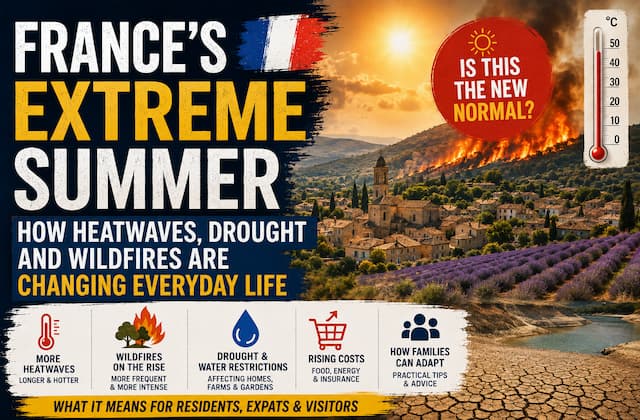
France has always enjoyed warm summers, but in recent years many residents have begun asking the same question: is this becoming the new normal? From record-breaking heatwaves and widespread drought to increasingly destructive forest fires, extreme weather is no longer something that happens occasionally—it is becoming part of everyday life. Whether you live in France, are planning to move here or simply enjoy visiting the country, these changes are affecting everything from household budgets and food prices to travel, health and how people adapt their homes.
Last updated: August 2026
Contents
- Why This Summer Feels Different
- The Growing Heatwave Problem
- Forest Fires Across France
- Drought and Water Restrictions
- How Everyday Life Is Changing
- The Cost of Extreme Weather
- Health and Safety
- Is This the New Normal?
- Practical Tips
- Frequently Asked Questions
At a Glance
- France is experiencing more frequent and longer-lasting heatwaves.
- Forest fires are becoming larger and occurring in more regions.
- Water shortages are affecting agriculture and everyday life.
- Extreme weather is pushing up some food and insurance costs.
- Homes, businesses and communities are adapting to hotter summers.
Why This Summer Feels Different
For many people living in France, this summer has felt noticeably different. Across much of the country, temperatures have remained above average for prolonged periods, while rainfall has been scarce in many regions. Forest fires have forced evacuations, smoke has affected air quality, and water restrictions have become increasingly common. Although France has always experienced occasional heatwaves, what makes recent summers stand out is not simply the highest daytime temperatures—it is the combination of several extreme weather events occurring together. Many areas have experienced:
- Extended periods without meaningful rainfall.
- Several separate heatwaves within the same summer.
- Very high overnight temperatures.
- Exceptionally dry vegetation.
- An increased risk of wildfires.
- Pressure on water supplies.
For residents, these are no longer isolated weather events. They are beginning to influence everyday decisions, from when to water the garden to whether it is safe to travel through certain regions.
The Growing Heatwave Problem
One of the biggest changes many people have noticed is the increasing number of heatwaves. In the past, periods of very hot weather often lasted only a few days before cooler Atlantic air brought some relief. More recently, however, heatwaves have become longer, more intense and, perhaps most importantly, more frequent. French weather services regularly issue Canicule alerts during periods of prolonged extreme heat. These warnings are designed to help people prepare for conditions that may present health risks, particularly for older people, young children and those with existing medical conditions.
Why Hot Nights Matter
Many people naturally focus on daytime temperatures, but health experts often say that overnight temperatures can be even more important. When temperatures remain above 20–25°C throughout the night, buildings have little opportunity to cool down. Bedrooms remain warm, sleep quality declines and the human body has less time to recover before another hot day begins. This is one reason why prolonged heatwaves can become dangerous even if daytime temperatures are not setting new records.
Did You Know?
The French word “Canicule” refers to an extended period of unusually high temperatures, often lasting several days or more. During these periods, the government may issue colour-coded weather alerts and provide additional advice for vulnerable people.
READ ALSO: From Baguettes to Banter: Why the French Market Still Defines Community
Urban Areas Feel Even Hotter
If you live in a city, the heat may feel even more intense. Large towns and cities often experience what scientists call the Urban Heat Island Effect. Concrete, asphalt and buildings absorb heat throughout the day and slowly release it overnight, keeping temperatures significantly higher than surrounding rural areas. This explains why people living in central Paris, Lyon, Marseille or Toulouse may experience much warmer nights than those living in nearby countryside. Limited green spaces, heavy traffic and densely packed buildings all contribute to this effect.
Life Doesn’t Stop During a Heatwave
Unlike a storm or heavy snowfall, a heatwave does not usually bring daily life to a complete halt. Shops remain open, roads continue operating and businesses generally continue as normal. Instead, people gradually adapt their routines. Across France it is becoming increasingly common to see people:
- Shopping early in the morning.
- Closing shutters during the afternoon.
- Walking dogs late in the evening.
- Avoiding outdoor exercise during the hottest part of the day.
- Opening windows only after sunset.
- Planning activities around the weather forecast.
These small adjustments have become part of everyday life for many residents.
For Expats
If you’ve recently moved to France from the UK, Ireland or northern Europe, one of the biggest adjustments can be learning to live with extended periods of hot weather. Many French homes are designed differently, often with shutters, tiled floors and thick walls that help keep indoor temperatures lower during the day.
More Than Just Hot Weather
Perhaps the biggest misconception about heatwaves is that they simply mean a few uncomfortable days. In reality, prolonged extreme heat affects almost every aspect of modern life. It influences:
- Food production.
- Electricity demand.
- Water supplies.
- Tourism.
- Transport.
- Public health.
- Insurance claims.
- Household spending.
As we will explore throughout this guide, the true impact of extreme weather often becomes visible weeks or even months after temperatures return to normal.
Forest Fires Across France
One of the most visible consequences of France’s hotter and drier summers has been the increase in forest fires. For many years, wildfires were largely associated with the Mediterranean coast, particularly Provence and the Côte d’Azur. Today, however, fires are occurring across a much wider area of the country, including parts of western and central France that historically experienced far fewer major incidents. During prolonged periods of hot, dry weather, forests, grassland and scrub become extremely combustible. Even a small spark can quickly develop into a fast-moving fire when combined with strong winds and low humidity. Every summer, thousands of firefighters, civil protection teams and volunteers work tirelessly to contain fires that threaten homes, businesses and natural habitats.
How Do Most Forest Fires Start?
Contrary to popular belief, most forest fires are not started naturally. Many are caused by everyday human activity, sometimes accidentally and sometimes deliberately. Common causes include:
- Discarded cigarette ends.
- Barbecues or campfires.
- Agricultural machinery.
- Sparks from vehicles.
- Power lines.
- Arson.
During periods of exceptional drought, authorities often introduce temporary restrictions on access to forests, prohibit outdoor fires and increase surveillance in high-risk areas.
Did You Know?
France has one of Europe’s largest aerial firefighting fleets, including the famous Canadair water-bombing aircraft, which are regularly deployed during major wildfire emergencies.
READ ALSO: The Ultimate Guide to Living in France as a British Expat: Tips, Tricks and Advice
Drought and Water Restrictions
While forest fires often dominate the headlines, drought may ultimately have the greater long-term impact on everyday life. Rainfall has become increasingly irregular across parts of France. Some areas experience intense downpours over a short period, while others go for weeks or even months with very little meaningful rainfall. This creates several problems. Heavy rain often runs quickly into rivers before it can fully replenish groundwater supplies, while prolonged dry periods reduce reservoir levels and place additional pressure on agriculture. As a result, many departments regularly introduce water restrictions during the summer months.
Typical Water Restrictions
Although restrictions vary by department, they may include:
- Limits on watering gardens.
- Restrictions on filling swimming pools.
- Bans on washing cars.
- Reduced agricultural irrigation.
- Restrictions on cleaning driveways and patios.
Local authorities adjust these measures according to reservoir levels, river flows and weather forecasts. It is therefore quite common for neighbouring departments to have different restrictions in place at the same time.
How Everyday Life Is Changing
Perhaps the biggest difference compared with twenty years ago is that extreme weather is beginning to influence everyday decisions throughout the summer. People are gradually adapting their lifestyles without necessarily noticing it.
Shopping Habits
Many people now shop earlier in the day to avoid the afternoon heat. Outdoor markets often become quieter during the hottest hours, while supermarkets experience increased demand for bottled water, fans, ice cream and fresh produce. Garden centres also see changing buying habits as customers look for drought-resistant plants instead of varieties requiring frequent watering.
Gardening
French gardens are changing too. Many homeowners are replacing thirsty lawns with gravel, Mediterranean plants or native species that require less watering. Rainwater collection systems are becoming increasingly popular, particularly in rural areas where gardeners want to make better use of winter rainfall. For vegetable growers, irrigation has become one of the biggest summer challenges.
Looking After Pets
Pet owners are also adapting. Dog walks increasingly take place early in the morning or after sunset when pavements are cooler. Owners are paying closer attention to hydration, shade and recognising the signs of heat stress. Veterinary professionals regularly remind owners that hot pavements can burn sensitive paws, while parked vehicles can become dangerously hot within minutes.
Outdoor Work
Construction workers, farmers, road crews and many other outdoor professionals are particularly affected by prolonged heat. Employers increasingly adjust working hours during periods of extreme temperatures by starting earlier in the morning and reducing physically demanding work during the afternoon. Some businesses also provide additional shaded rest areas and increased water breaks.
The Hidden Cost of Extreme Weather
Heatwaves and drought affect far more than comfort. They also affect household finances. Many costs appear gradually rather than immediately, making them easy to overlook.
Food Prices
Agriculture depends heavily on reliable weather. Long periods without rainfall can reduce crop yields, increase irrigation costs and make farming more difficult. Fruit and vegetables are often among the first products affected because they depend on consistent growing conditions. Although food prices are influenced by many factors—including energy costs, transport and global markets—poor harvests can place additional pressure on supermarket prices.
Electricity Bills
Historically, French electricity demand peaked during winter because of electric heating. Increasingly, however, summer demand is also rising as more households install portable air conditioning units or use fans for extended periods. While a fan typically costs relatively little to run, air conditioning can noticeably increase electricity consumption if used continuously. This has encouraged many homeowners to look for low-cost cooling solutions such as shutters, reflective blinds and improved insulation.
Insurance Costs
As extreme weather becomes more frequent, insurers face growing numbers of claims relating to wildfire damage, subsidence caused by drought and severe storms. Over time, this may place upward pressure on insurance premiums in some regions. Homeowners are therefore becoming increasingly interested in practical ways to reduce weather-related risks around their properties.
Jason’s Tip
If you own property in France, summer preparation is becoming almost as important as winter preparation. Keeping gutters clear, trimming dry vegetation and understanding local water restrictions can help reduce both risks and unexpected costs.
Tourism Is Changing Too
Summer remains France’s busiest tourist season, but extreme weather is changing the way many visitors plan their holidays. During major heatwaves, tourists increasingly:
- Visit attractions earlier in the day.
- Choose accommodation with air conditioning.
- Avoid long hikes during the afternoon.
- Monitor wildfire warnings before travelling.
- Check local air quality where fires are active.
Fortunately, most of France remains perfectly safe to visit during the summer. However, visitors are becoming more aware that local conditions can change quickly during periods of prolonged heat and drought.
Is This the New Normal?
It is perhaps the biggest question many people are asking. Has France simply experienced an unusually hot few years, or are extreme summers becoming part of everyday life? While no single heatwave can be blamed on one cause alone, climate scientists generally agree that Europe is experiencing a long-term warming trend that is increasing the likelihood of prolonged periods of extreme heat. For France, this means that events once considered exceptional may gradually become more common. Communities across the country are already adapting. Many local authorities are investing in:
- Improved wildfire prevention.
- Additional water storage.
- Tree planting in urban areas.
- Better insulation standards.
- Heatwave emergency planning.
- More resilient agriculture.
These changes suggest that France is not simply reacting to one particularly hot summer—it is preparing for a future in which extreme weather becomes a more regular feature of life.
Why Traditional French Homes Often Stay Cooler
Many newcomers to France quickly notice that older French houses often remain surprisingly comfortable during hot weather. This is not accidental. Traditional French architecture developed long before air conditioning became common and incorporates several features designed to reduce heat.
Stone Walls
Many older homes have thick stone walls that absorb heat slowly during the day before gradually releasing it overnight.
External Shutters
One of the most effective cooling systems is also one of the simplest. Closing shutters during the hottest part of the day prevents direct sunlight from entering rooms, significantly reducing indoor temperatures.
Natural Ventilation
French households often open windows early in the morning and again late in the evening, creating cross-ventilation once outdoor temperatures begin to fall.
Tile Floors
Ceramic and stone floors remain naturally cooler than carpets during hot weather and help regulate indoor temperatures.
Jason’s Tip
If you’re moving to France, don’t underestimate the value of shutters. Closing them before the morning sun reaches your windows is often far more effective than trying to cool the house later in the afternoon.
READ ALSO: Tips for Renovating Property in France
Practical Tips for Surviving a French Heatwave
Most heatwaves can be managed safely with sensible preparation. Simple changes to your daily routine often make a significant difference.
Keep Your Home Cool
- Close shutters before direct sunlight reaches your windows.
- Keep curtains closed during the afternoon.
- Open windows once outdoor temperatures begin to fall.
- Use fans to improve airflow.
- Avoid using ovens during the hottest part of the day.
Stay Hydrated
- Drink water regularly.
- Carry a bottle when travelling.
- Avoid excessive alcohol in extreme heat.
- Eat lighter meals where possible.
Look After Vulnerable People
- Older neighbours.
- Young children.
- People with existing health conditions.
- Pets.
Driving During Extreme Heat
- Carry drinking water.
- Check coolant levels.
- Never leave children or pets inside parked vehicles.
- Watch for wildfire-related road closures.
Frequently Asked Questions
What is a Canicule?
A Canicule is the French term for a prolonged period of unusually high temperatures that may present health risks.
Which parts of France are most affected by heatwaves?
Southern France generally experiences the highest temperatures, although recent years have seen exceptional heat across much of the country.
Why are there more forest fires?
Longer dry periods, hotter temperatures and dry vegetation increase wildfire risk. Human activity remains responsible for many fires.
Can tourists still visit France during the summer?
Absolutely. Millions of people continue to enjoy holidays across France every year. However, visitors should stay informed about local weather conditions and any wildfire restrictions.
Do water restrictions apply everywhere?
No. Restrictions vary by department depending on local water supplies and weather conditions.
Will food prices continue to rise?
Weather is only one factor affecting prices, but poor harvests can place additional pressure on fruit, vegetables and other agricultural products.
Should I install air conditioning?
Many people manage comfortably using shutters, ventilation and fans. Whether air conditioning is worthwhile depends on your home, location and personal circumstances.
Why do French people close their shutters during the day?
Keeping direct sunlight out of the house is one of the simplest and most effective ways of reducing indoor temperatures.
Are summers likely to become hotter?
Current scientific research suggests that Europe is likely to experience more frequent periods of extreme heat over the coming decades.
Can I light a barbecue during a heatwave?
Always check local regulations. During periods of high fire risk, outdoor fires and barbecues may be restricted or prohibited.
How can I find out about local restrictions?
Your local prefecture and mairie normally publish information on water restrictions, fire risks and emergency measures affecting your area.
Key Takeaways
- Extreme weather is becoming a larger part of everyday life in France.
- Heatwaves affect health, travel, agriculture and household budgets.
- Forest fires and drought are increasing in both frequency and impact.
- French homes often use simple architectural features to stay cooler.
- Good preparation can significantly reduce the impact of prolonged hot weather.
Final Thoughts
France’s climate has always varied from the cool Atlantic coast to the hot Mediterranean south. However, recent summers have highlighted just how quickly weather patterns can influence everyday life. From water restrictions and forest fires to changing shopping habits and rising food prices, extreme weather is no longer simply a seasonal inconvenience. It is becoming an important factor in how people live, work and plan for the future. The good news is that France has a long history of adapting to its environment. Homes are being modernised, towns are investing in greener public spaces, firefighters continue to develop world-class response capabilities and communities are finding practical ways to cope with hotter summers. Whether you’re an expat, a long-term resident or simply planning a holiday, understanding these changes will help you enjoy everything France has to offer while staying safe and prepared.