
Historic Flooding Crisis Hits Western France
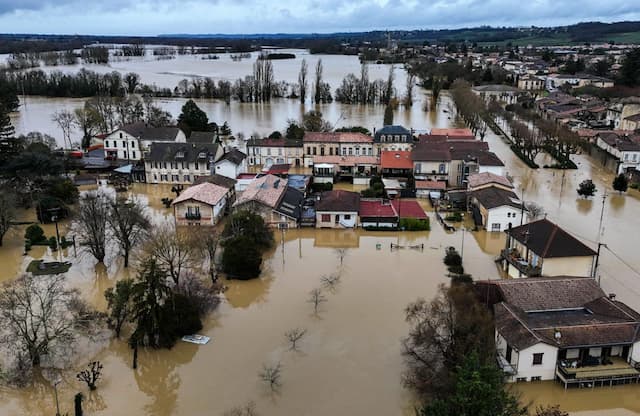
Historic Flooding Crisis Grips Western France: Thousands Evacuated
France is facing one of its most severe flooding crises in decades. As of Tuesday, February 17, 2026, three French departments — Maine-et-Loire, Gironde, and Lot-et-Garonne — remain under red alert for exceptional river flooding. Météo-France warns the situation is far from over, with waters expected to keep rising through the week.
A Rare Red Alert Situation
Red alerts are the highest level of weather warning in France and are rarely issued across multiple regions simultaneously. The director of Vigicrues, Lucie Chadourne-Facon, described the situation as “exceptional and prolonged,” pointing out that crises of this scale haven’t been seen for decades.
“We’re facing widespread, exceptional flooding across the country that will still last several days,” Chadourne-Facon said.
Alongside those under red alert, fourteen other departments remain on orange alert, covering wide stretches of western and southwestern France.
Unprecedented Flooding Not Seen Since 1959
According to France’s Ministry for Ecological Transition, floodwaters have saturated the ground beyond anything recorded in modern memory. Minister Monique Barbut, speaking from Gironde, emphasized:
“We’ve had 31 consecutive days of flooding — that’s something we simply haven’t seen. Not since 1959 have French soils been this saturated.”
In Angers, water levels on the Maine River are expected to peak above 6 metres, a record not seen since the year 2000. Mayor Christophe Béchu urged residents to remain cautious: “We haven’t seen these water levels in 25 years.”
Communities Underwater — Nearly 2,000 Evacuated
Across the affected departments, close to 2,000 residents have been forced to leave their homes.
In Lot-et-Garonne, more than 1,500 people have been evacuated, including 1,000 from Aiguillon alone.
The Maine-et-Loire prefecture reported nearly 900 evacuations over the weekend.
Eight protective dikes have been damaged or overtopped in Lot-et-Garonne, worsening the flooding risk as new rainfall approaches.
Authorities now warn that a second wave of flooding could strike the Garonne Valley overnight Tuesday into Wednesday, potentially overwhelming local defences again.
Government Response and State of Natural Disaster
In response to the worsening crisis, the French government has pledged to declare a “state of natural disaster” (catastrophe naturelle) once the flooding subsides. This measure fast-tracks insurance claims and provides relief funds to affected communities.
Meanwhile, over 35,000 households remain without power, mainly due to damage from Storm Nils, which swept through France last week. Enedis, the national electric grid operator, continues repair efforts across several departments.
Climate Experts Warn: “This Is the New Normal”
Meteorologists and climate scientists say these floods confirm a worrying pattern: France is seeing more frequent and intense flooding events linked to heavier winter rainfall and extreme storms. Warmer Atlantic temperatures, they argue, are intensifying storm systems and preventing rivers from draining effectively between rain episodes.
Hydrologists warn that infrastructure — from levees to drainage networks — was “never designed for this level of sustained rainfall.” The government is expected to review new climate resilience measures following the crisis.
How Residents Are Coping
Across western France, communities have come together to assist evacuees and clear debris. Volunteers are working with firefighters and local officials to distribute food, blankets, and emergency shelter. Charities have launched donation drives across Anjou, Gironde, and the Garonne Valley to support affected families.
Residents have been urged to:
Avoid driving on flooded roads.
Follow local authority updates closely.
Contact their insurer immediately if evacuation or property damage occurs.
What Happens Next
Meteorological forecasts predict continued high water levels through the end of the week, with new rainfall expected from Thursday.
Authorities remain cautious but hopeful: if rain intensity decreases, rivers could begin receding by the weekend.
For now, much of western France remains on alert — and hoping the skies finally clear.
Enjoyed this? Get the week’s top France stories

One email every Sunday. Unsubscribe anytime.

