
AI World Cup 2026: How Tech Is Transforming Football
AI World Cup 2026: How Artificial Intelligence Is Redefining Football
The 2026 FIFA World Cup is not just the biggest tournament in football history—it is also the most technologically advanced. Hosted across the United States, Canada, and Mexico, this edition marks a turning point where artificial intelligence is no longer experimental but fully embedded into the fabric of the game.
From AI-powered refereeing decisions to real-time tactical insights and robotic security, the World Cup has become a global showcase of how technology is reshaping sport at every level. For fans, players, coaches, and even content creators, this is a glimpse into the future of football.
The Rise of the “AI World Cup”
Artificial intelligence has been gradually introduced into football over the past decade, but 2026 represents a complete integration. FIFA and its partners have created a data-driven ecosystem where nearly every movement on the pitch is tracked, analyzed, and interpreted.
This shift is not just about accuracy—it is about speed, insight, and competitive advantage.
Key innovations include:
Real-time player tracking using AI-enhanced sensors
Automated officiating systems with near-instant decisions
Tactical AI tools used by coaching staff during matches
Enhanced fan engagement powered by predictive analytics
The result is a faster, more precise, and more strategic version of the game.
READ ALSO: World Cup 2026: New Rules & Host City Buzz
Smart Balls and Real-Time Tracking
The Technology Inside the Ball
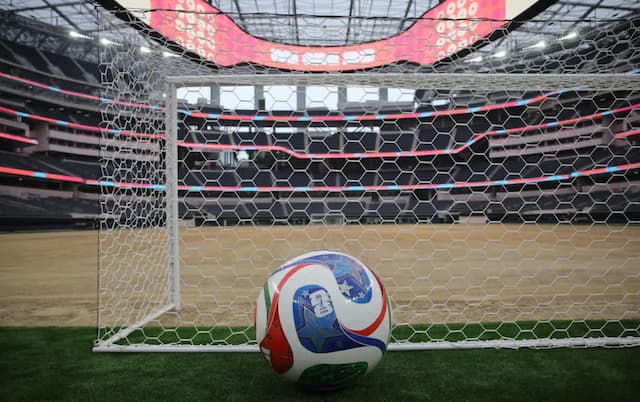
At the center of this transformation is the Adidas “Trionda” smart match ball. Unlike traditional footballs, this ball contains an inertial measurement unit (IMU) sensor that transmits data up to 500 times per second.
This allows:
Instant detection of ball contact
Precise tracking of speed, spin, and trajectory
Improved accuracy in offside decisions
The data is fed directly into FIFA’s AI systems, eliminating ambiguity in critical match moments.
3D Player Avatars and Offside Accuracy
Each of the 1,248 players participating in the tournament has undergone a rapid full-body scan to create a detailed 3D avatar. These avatars are used in semi-automated offside technology, allowing the system to track exact limb positions with millimeter precision.
Instead of relying on human judgment, AI now determines:
Whether a player is offside at the exact moment of the pass
The positioning of specific body parts
The timing of movements relative to the ball
This dramatically reduces controversial decisions and speeds up the game.
READ ALSO: Philadelphia World Cup 2026: Brazil, France Headline Epic Matches at Lincoln Financial Field
AI-Powered Coaching and Tactical Analysis
Football AI Pro: The Digital Assistant
One of the most powerful tools introduced at the tournament is Football AI Pro, a generative AI system developed in partnership with Lenovo. This platform analyzes hundreds of millions of data points across thousands of metrics.
Coaches can access:
Real-time tactical breakdowns
Opponent weaknesses and pattern recognition
Player performance analytics
3D visualizations of match scenarios
The system processes match data within hours, allowing teams to adapt quickly between games.
How Teams Are Using AI
Top national teams are already integrating AI deeply into their preparation.
For example:
The United States is using AI platforms to combine video analysis with player tracking data
England’s setup includes systems that analyze thousands of movements per second
AI tools are being used to improve penalty success rates and injury prevention
This represents a major shift from intuition-based coaching to data-driven decision-making.
Big Tech’s Role in the Tournament
AI as a Global Showcase
The 2026 World Cup has become a stage for major technology companies to demonstrate their AI capabilities on a global scale.
Key players include:
Lenovo: Providing infrastructure and AI-powered analytics systems
Salesforce: Delivering fan engagement through intelligent CRM platforms
Google: Enhancing search and fan interaction with AI-driven insights
YouTube: Expanding content distribution and live engagement
These partnerships highlight how sport is increasingly intertwined with the tech industry.
Robotics and Stadium Security
Security has also been transformed through AI and robotics.
Notable deployments include:
Boston Dynamics “Spot” robots patrolling stadium perimeters
AI-powered surveillance systems monitoring crowd behavior
Robotic “K9” units equipped with cameras and night vision in Mexico
These technologies improve safety while reducing the need for large human security teams.
Refereeing Enters the AI Era
Smarter Decisions, Faster Outcomes
Refereeing has always been one of football’s most controversial aspects. AI is now addressing this by providing instant, data-backed decisions.
Innovations include:
AI-assisted VAR systems with faster processing times
Automated offside detection with 3D visualization
Referee body cameras enhanced with AI stabilization
These tools aim to reduce errors while maintaining the flow of the game.
The Human-AI Balance
Despite these advancements, referees are still central to decision-making. AI acts as a support system rather than a replacement, ensuring that the human element remains part of the sport.
This balance is crucial for maintaining the integrity and emotional connection of football.
Fan Experience in the AI Age
Personalized and Interactive Viewing
AI is not only transforming the game—it is also changing how fans experience it.
New features include:
Personalized match highlights based on viewer preferences
Real-time statistics and predictive insights during games
AI-generated commentary and analysis
Fans can now engage with football in a more interactive and immersive way than ever before.
The Future of Football Technology
What Comes Next?
The 2026 World Cup is likely just the beginning. Future developments may include:
Fully automated refereeing systems
AI-generated match simulations for training
Advanced wearable technology for players
Deeper integration of augmented and virtual reality for fans
As AI continues to evolve, its role in football will only expand.
Opportunities Beyond the Game
The implications go far beyond sport. The technologies being tested here can be applied to:
Healthcare and biomechanics
Security and surveillance systems
Data analytics across industries
Football is simply the testing ground.
Conclusion
The 2026 FIFA World Cup is more than a tournament—it is a technological milestone. Artificial intelligence is redefining how football is played, managed, and experienced.
From smart balls and 3D avatars to AI-powered coaching and robotic security, the game is entering a new era. For fans, it means greater transparency and engagement. For teams, it offers a competitive edge. And for content creators, it presents a powerful opportunity to tap into a rapidly growing trend.
The real question is no longer whether AI belongs in football—but how far it will go.
Enjoyed this? Get the week’s top France stories

One email every Sunday. Unsubscribe anytime.

